
Gum Disease Treatment New York
No More Infection Means a Healthier Smile
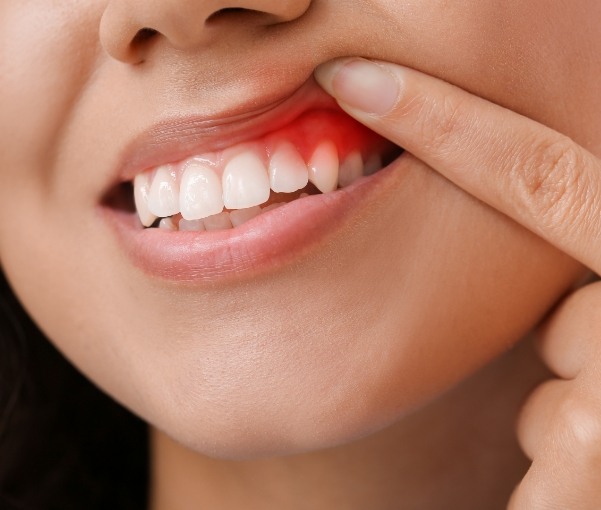
Recently, there has been no shortage of studies proving a direct link between the bacteria in gum disease and a wide variety of overall health problems, including heart disease, diabetes, cancer, osteoporosis, respiratory disease, and chronic inflammation. It is now believed that maintaining good gum health doesn’t just save your teeth, but actually extends your lifespan. At Gramercy Dental Studio, our team of experts can ensure the health and future of your gums, teeth, and body using gum disease treatment in New York. Call our office to find out how we target bad bacteria to keep it from spreading.
Why Choose Gramercy Dental Studio for Gum Disease Treatment?
- Dental Laser Used to Target Bacteria
- Sedation Dentistry Available for Anxious Patients
- Convenient Saturday Appointments
What Is Gum Disease?
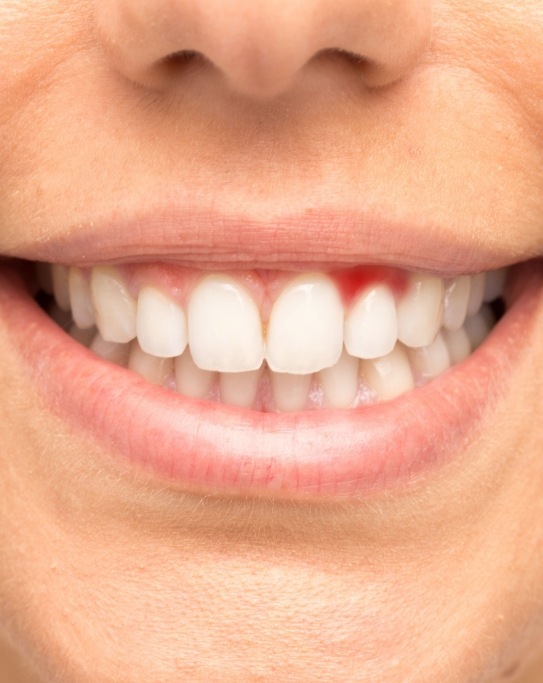
Periodontal disease (also known as gum disease) is all about bacteria living under the gumline and around the roots of your teeth. The bacteria eat the food that you consume, send waste products around the gums, and destroy the gum attachment to the teeth, creating deep pockets. A normal space between the gum and the teeth is 3 mm. A pocket with gum disease can be 4, 5, 6, or even up to 10 mm deep. Eventually, the bacteria attack the bone, and the teeth start to become loose.
Gum Disease Symptoms

Strangely enough, most of the symptoms of gum disease are not painful and you may not know you have it until you have lost a considerable amount of bone around your teeth. Some of the signs to look for are:
- Bleeding gums when brushing, flossing, or eating hard foods
- Pus oozing when you press on your gum
- Persistent bad breath
- Mouth sores
- Gums that are pulling away from the teeth
- Swollen or red gums
- A change in your bite
- A change in how your partial dentures fit
- Loose teeth
Gum Disease Treatments
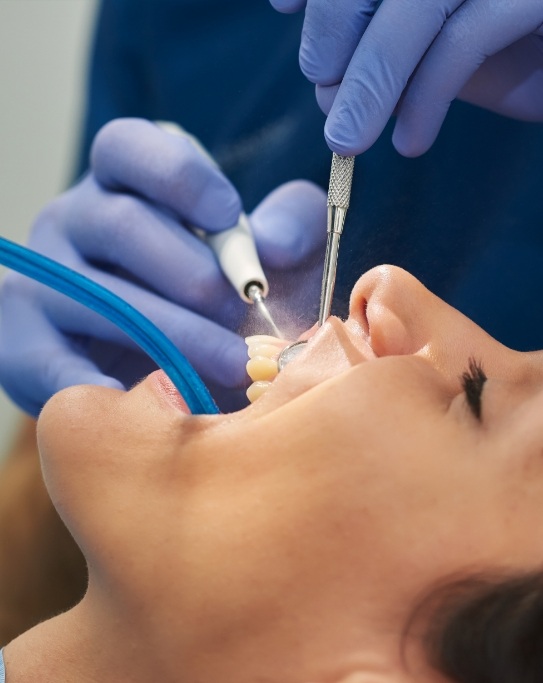
At Gramercy Dental Studio, Dr. Newman offers non-surgical methods of gum disease treatment that are precise, natural, and comfortable for the patient while still creating stellar results. These options include scaling and root planing, state-of-the-art soft tissue laser treatment, and antibiotic therapy.
Scaling & Root Planing
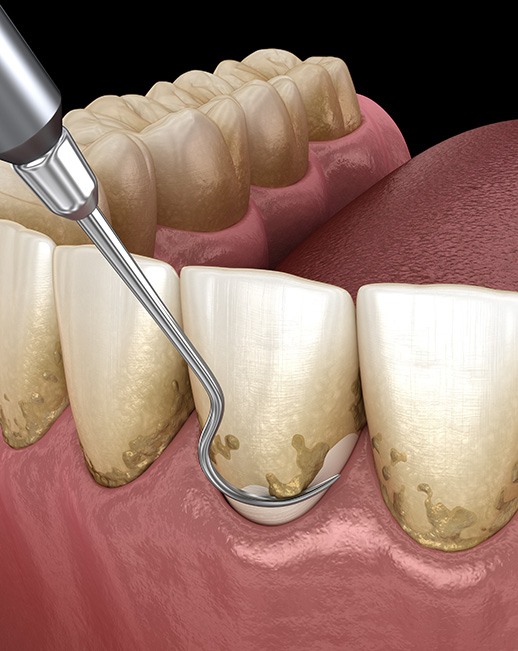
Sometimes referred to as “deep cleaning,” scaling and root planing is often done during the early stages of gum disease to help stop it from worsening. First, your dentist will remove plaque and tartar from below the gumline to help keep dangerous bacteria at bay and restore your gum tissue. Then, they will smooth out the roots of the tooth so that your gum tissue can healthily reattach and protect your smile for years to come.
Do I Need Scaling & Root Planing?
If you are exhibiting signs of gum disease such as deep gingival pockets, red or swollen gums, bleeding when you brush and floss your teeth, persistent halitosis, and receding gums, your dentist may recommend scaling and root planing.
While the early stages of gum disease can often be reversed with a proper at-home oral hygiene routine, if the condition has progressed, scaling and root planing may be necessary to prevent it from progressing.
The Process of Scaling & Root Planing
Typically, the scaling and root planing process takes place over the course of two appointments:
- At the first appointment, your dentist will use a scaler to clear away all the plaque and tartar from the surface of your teeth, reaching as far down as they can into the pockets of the gums.
- At the second appointment, they will conduct the planing portion of the treatment by removing the hardened bacterial deposits on the roots of your teeth hidden below the gumline. This will help prevent further infection by preventing bacteria from re-colonizing in your gums.
Aftercare Tips for Scaling & Root Planing
Because scaling and root planing can be an intensive treatment, it may take a few weeks for your teeth and gums to completely recover. During this time, you may experience increased sensitivity and discomfort as a natural part of the healing process. Here are some aftercare tips to assist you during this time:
- Rinse your gums with warm saltwater after each meal to help prevent irritation and loosen any food debris from around the teeth. This will also make brushing and flossing easier. You can make the saltwater mixture by adding ¼ tsp of salt to 8 ounces of water.
- Be very gentle when brushing your teeth after treatment, and don’t use a hard-bristled toothbrush. Instead, stick to a soft-bristled brush, and to avoid irritation and bleeding, brush in small circular motions and move very slowly to avoid worsening discomfort throughout the healing process.
- Because your teeth and gums can be sensitive to certain foods and beverages after scaling and root planing, it’s best to avoid any that are hot and spicy, as well as alcohol and acidic beverages.
- Do not smoke or use tobacco products.
- Eat a soft diet for the first 48 hours after treatment.
- Avoid performing any intensive physical activity directly after your procedure to avoid prolonging the healing process.
Laser Treatment
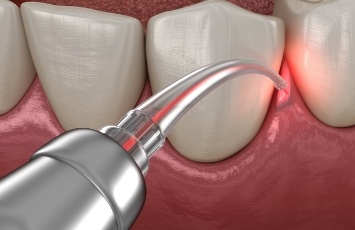
To carefully target bacteria in smaller crevices of the gum tissue, we use our diode laser. Designed for pocket debacterialization, the use of a laser helps to create a less invasive process that focuses solely on eliminating harmful particles that irritate and weaken the jawbone and gums. Because of its optimal precision, it leaves healthy tissue alone.
Antibiotic Treatment

If you have severe gum disease, we may suggest antibiotic therapy in combination with other options. This treatment directly applies a special antibiotic – Arestin®– to your infected gums. In doing so, it eliminates the infecting bacteria over a period of two weeks. The applied medicine will then dissipate and leave you with much smaller gum pockets, thus improving your oral health.
What is Antibiotic Treatment?

Beyond the points above, maybe you’d like to learn more about antibiotic treatment. That’s no problem; our team will gladly share the details.
We at Gramercy Dental Studio use Arestin® for antibiotic treatment. Unlike other drugs, it’s a topical gel placed directly into your infected gum pockets after a scaling and root planing (SRP) procedure. Its main ingredient – minocycline – attacks your infection’s bacteria once it’s thoroughly applied. Given that fact, the drug will have thoroughly removed the source of your gum disease after two weeks.
Notably, the placement of Arestin® is quick and easy. It only takes a minute or two at most, and it doesn’t require any needles or anesthesia.
Why Combine Antibiotic Treatment with Scaling & Root Planing?
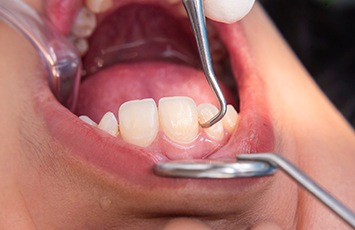
Since antibiotics and SRP can both treat gum disease, you may wonder why you’d need to combine them. What’s the point of doing so?
As it turns out, scaling and root planing aren’t always enough. This procedure can occasionally “miss” or fail to reach some of the bacteria infecting your gums. To compensate for that flaw, antibiotic treatment penetrates deep into the pockets between your teeth and gum tissue. It can thus remove the hard-to-reach bacteria and improve your therapy’s results.
Of course, only a qualified dentist will know whether antibiotic treatment could help you. You should thus consult Dr. Newman before you decide anything.
Benefits of Antibiotic Treatment

Should you receive our antibiotic treatment, you’ll enjoy many great benefits. The most common of these include:
- More Precise Care – Unlike scaling and root planing, antibiotic treatment directly targets gum disease bacteria. It’s thus highly precise and more effective than SRP alone.
- Easy Administration – Applying the treatment’s antibiotic is very easy, both for you and the dentist. The process is painless and only involves a few minutes.
- Few or No Side Effects – Antibiotic treatment rarely has side effects. Should you get it, there’s very little chance that you’ll face complications.
- Reduced Reinfection Risk – Because antibiotic treatment removes more harmful bacteria, it leaves you with a greatly reduced risk of reinfection.
